
>
INITIALIZING CORE SYSTEMS
OJAS is the onboard mission reasoning engine for defence platforms — edge-native, sensor-fused, and built indigenously for India. No cloud dependency. Traceable decisions a commander can audit, override, and trust.
What you're seeing is a concept simulator of μISR — our OJAS-powered edge network. It's not a game; it's a visualization of how onboard intelligence behaves when the cloud disappears. Six nodes, twelve mesh links, zero cloud dependency.
Every modern defence platform — UAVs, UGVs, surveillance nodes — is built for peacetime connectivity. GPS lock. Live cloud uplink. Clean sensor feeds. Take it to 15,000 feet on the Ladakh plateau: jamming active, comms severed, GPS spoofed, sensors degraded. The machine goes blind — not because the hardware failed, but because the reasoning was sitting on a server, waiting for a signal that never comes.
A vehicle-agnostic, sensor-fused onboard compute stack — not a software dashboard. OJAS fuses camera, LiDAR, radar, and IMU feeds in real time, directly on the platform. It does not stream data out. It reasons locally.
A hybrid of learned perception and deterministic rule structures. OJAS does not output a black-box probability score — it produces a traceable decision chain with deterministic, verifiable inference output.
Camera, LiDAR, radar, and IMU fused in real time on constrained compute. A deeply embedded reasoning substrate co-designed with the hardware it runs on — millisecond latency at the point of action.
UAV, UGV, UAS, or fixed surveillance nodes — plus Ground Control Station integration today, without platform modification. Human-in-command. Always.
One onboard mission reasoning engine — platform-agnostic deployment across aerial, ground, multi-agent, and fixed domains. Zero cloud dependency in the loop.
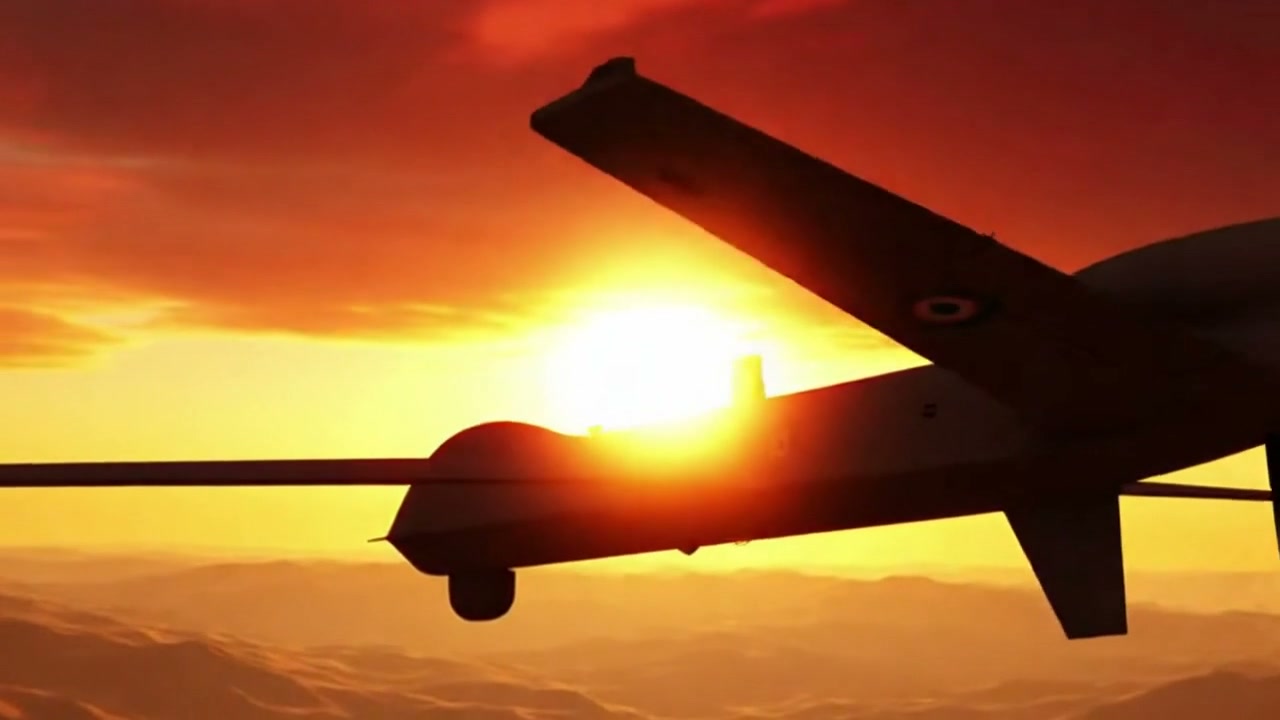
Fixed-wing and rotary platforms gain onboard reasoning for target classification, threat avoidance, and mission re-routing — fused locally, no uplink required.

Ground assets achieve real-time terrain interpretation, obstacle reasoning, and threat response in GPS-denied or signal-contested urban and field environments.

Multi-platform networks share a sensor-fused reasoning substrate — coordinating missions and distributing fused situational awareness with traceable decision bounds.

Perimeter defence, radar installations, and command posts gain certified autonomous classification and response — removing human reaction-time bottlenecks from the kill chain.
OJAS separates learned perception from structured reasoning — producing outputs that are traceable, auditable, and designed to degrade gracefully under partial sensor failure rather than collapse.
Learned perception models feed deterministic rule structures. The engine outputs auditable reasoning — not opaque scores — so commanders can trace every step from sensor input to recommended action.
Traceable ChainCamera, LiDAR, radar, and IMU streams are fused on-device in real time. OJAS does not stream raw data out for cloud inference — fusion and reasoning happen at the edge.
Onboard FusionDesigned for GPS-denied and comms-denied conditions. Maintains operational reasoning under jamming, spoofing, and sensor degradation — graceful fallback, not catastrophic failure.
GPS / Comms DeniedPrototype deployable on existing ground control infrastructure today — no platform modification required. Command override and mission audit built into the workflow.
Ground ControlWe sell to defence R&D labs and system integrators with existing procurement pathways into the armed forces. Applying for iDEX DISC-14 and ADITI 4.0 — the primary government mechanisms for indigenously built deep-tech at our stage.
OJAS deployable on existing ground control infrastructure — no platform modification required.
Paid technical co-development engagement — not a free pilot.
Expansion into industrial robotics and border surveillance.
Onboard reasoning across multiple platform types and operational theatres.
The kill condition no one is solving at the component level is onboard reasoning under denial. OJAS exists so India's defence platforms carry decisions that can be trusted — traceable, sovereign, and local to the mission.
We work with defence R&D labs, system integrators, and strategic partners building onboard reasoning for contested environments. If your platform must decide locally — we want to talk.